
Visiting Hours: 06:00 am to 06:00 pm, Everyday
Entry Fees: Free Entry
How to get there: Adalaj stepwell is approximately 18 to 20 km from Ahemdabad City and about 4 to 5 km from the capital of Gujrat, Gandhinagar.
By road: Gujarat has one of the better-developed road networks in India. Ahmedabad is well connected with all major cities and towns by road. Prominent bus stops are located at Gita Mandir near Kalupur Railway Station and Paldi. Regular bus services are available by Gujarat state transport buses and private operators to all the major destinations of the state.
By rail: The main railway station is located in Kalupur area. This station falls under the prominent national railway circuit and is connected to all major cities of India.
By air: Sardar Vallabhbhai Patel airport at Ahmedabad is a well connected domestic and international airport.
Architecture: Indo-Islamic Architecture
Address: Adalaj, Gandhinagar District, Ahmedabad, Gujarat, 382421.
History
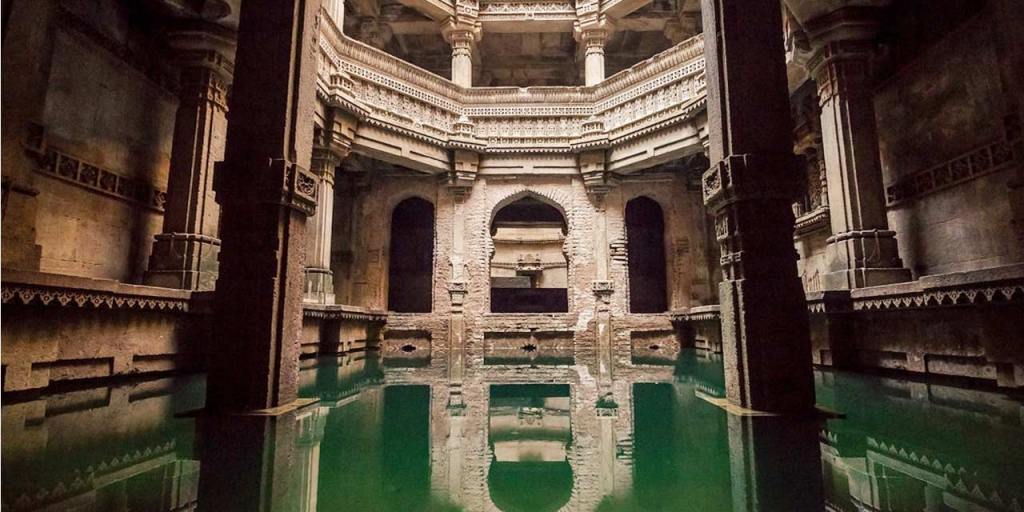
Stepwell or the stepped ponds were generally built in semi-arid regions of the country especially along trade routes. These architectural sites were often used to store monsoon rains and by several pilgrims and traders passing through the way as their resting place.
Making up an essential part of Ahmedabad’s history, Adalaj Step Well was commissioned by famous queen Rudabai the wife of Vaghela dynasty’s Rana Veer Singh in 1498. He was the ruler of a small kingdom denoted as Dandai Desh.
According to legends the kingdom faced an acute shortage of water and to resolve the same, the king Rana Veer Singh decided to build a big stepwell. Though the king started the construction work but could not complete it, as he died in a battle with the Sultan of Gujarat, Mahmud Begada.
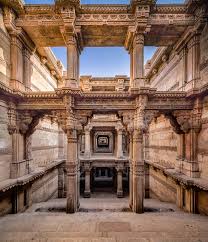
Mahmud Begada fell in love with queen Rudabai and wanted to marry her. However, the queen agreed to the proposal provided Mahmud completed the construction of the stepwell. After the completion of the vav, queen Rudabai asked a few saints to take bath in the water making it a holy well. She then fell into the vav and died.
As Mahmud Begada did not want any replica of the stepwell ordered the killing of the six masons involved in its construction whose tombs can be found near the stepwell. An inscription written in Sanskrit on a marble slab on the first floor indicates the history of this amazing architectural site. It states that the cost of construction was around 5,00,111 tanks or five lakhs.
The cultural and architectural depiction in the deep wells at various levels is a tribute to the history of step wells, built initially by Hindus and subsequently ornamented and blended with Islamic architecture during the Muslim rule.
Architecture
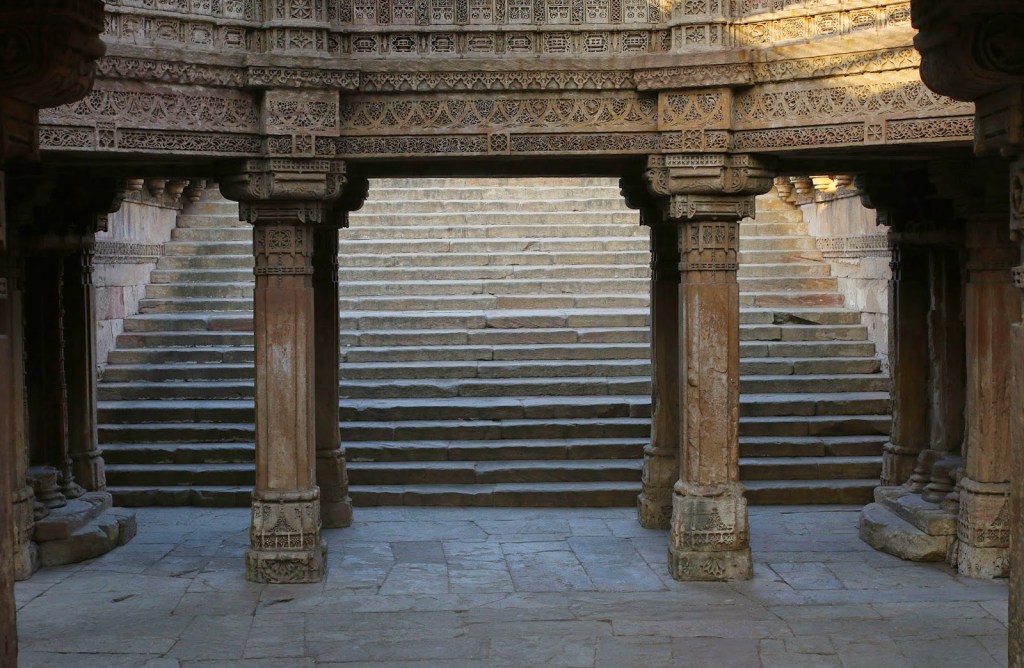
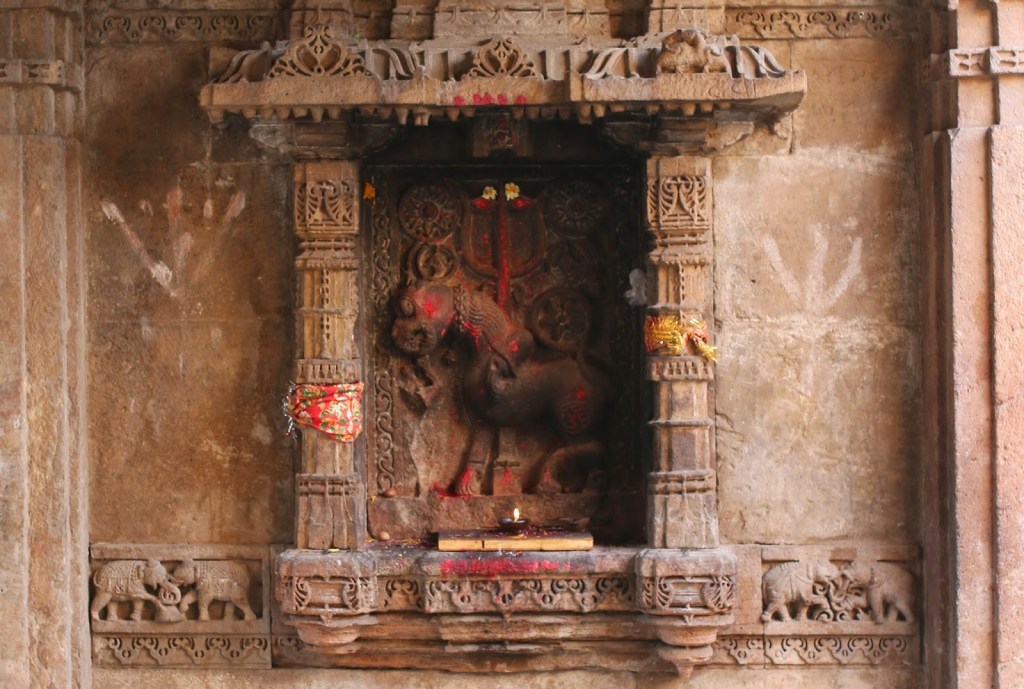
The wondrous monument is a five-storey stepwell also holds significance owing to the deities engraved on its walls. It is believed that villagers visit the stepwell and offer their prayers to the deities. There is a temple located at the entrance of the vav.
Light peeps in through the opening in the ceiling of the incredibly stunning historic monument that is constructed in the shape of an octagonal. This fascinating structure has been built in such a way that the temperature inside the stepwell is almost 6 degrees lesser than the outside temperature.
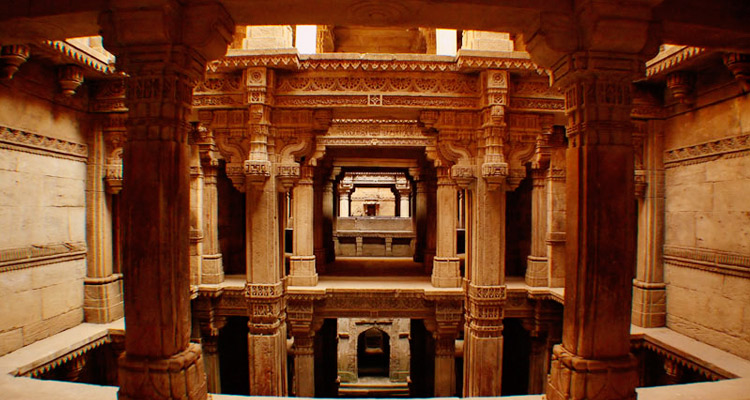
There are three entrance stairs leading into the stepwell. A spectacular example of Indo-Islamic architectural style and design features a striking pot said to contain the water of life called the Ami Khumbor and the tree of life called the Kalpavriksha sculpted from a single stone.
A notable feature of the structure is the navgrah at the end of the well that is believed to protect the historic site from evil spirits. Travellers would be delighted viewing the breathtaking windows found on the first floor.
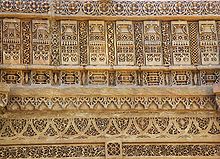
The octagonal-shaped stepwell is supported by a huge number of pillars. Every floor had enough space for people to hold gatherings. A well-planned stepwell was dug deep to ensure enough storage of water so that people do not starve during the lack of rainfall.
People can move down through three staircases from the first floor. Walls are ornamented with floral motifs and the wonderful carvings illustrate several impressive images including that of Hindu deities, elephants, flowers, fish, leaves, birds and mini turret.
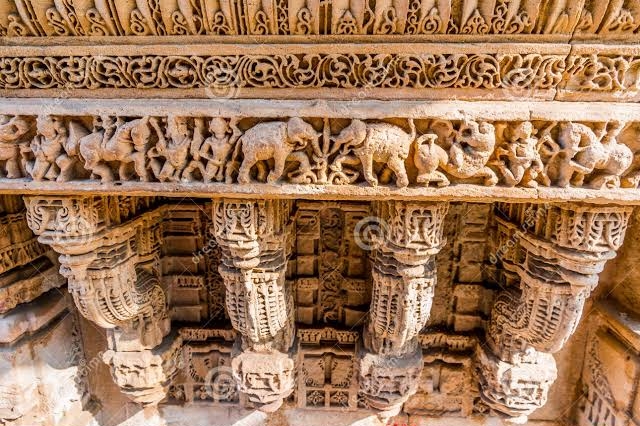
This classical piece of architecture perfectly blends in Islamic floral and geometric designs and Hindu as well as Jain icons and symbols. Other noteworthy carvings include that of women talking to each other and being overlooked by the king, dancers, musicians and women churning buttermilk.
A tribute paid to the rich underground structures, which are intricately decorated with sculptures, is that they are said to resemble palaces
Thank you for reading this blog and hanging in till here. I will be sharing my such travel experiences and destinations in future so follow my blogs and stay connected. Dont forget to hit the Like button if you found my blog interesting. You can also comment down your views below and share it.
You can also support me by following my other social media handles. You can find out the link in the bottom.
Thank You!
Team Travelographer

 Travelographer