
Visitor Information
Visiting Time: Daily, 9 am to 5 pm
Entry Fees:
- For Indians – ₹50
- For Foreigners – ₹200
How to reach there:
The city of Jaipur is well-connected with other Indian cities by air, rail and road and also with some international cities by air. The Jaipur International Airport is situated at Sanganer, a southern suburb at a distance of 13 kilometres from Jaipur.
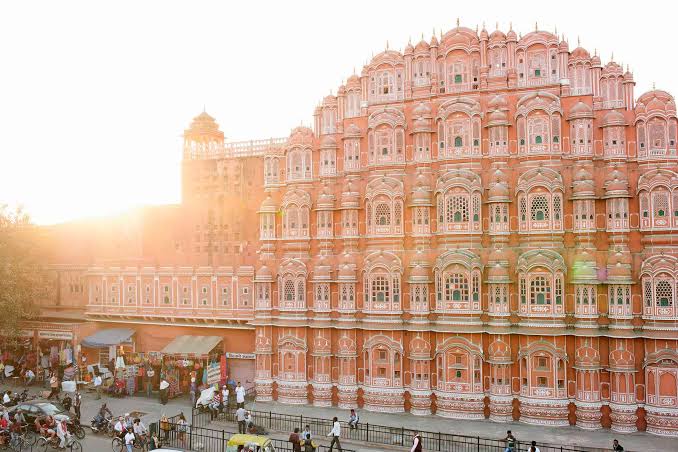
Best time to visit: The best time to visit Hawa Mahal is early in the morning when the sun rays enter the rooms through the windows. The mahal is illuminated with golden sun rays.
History
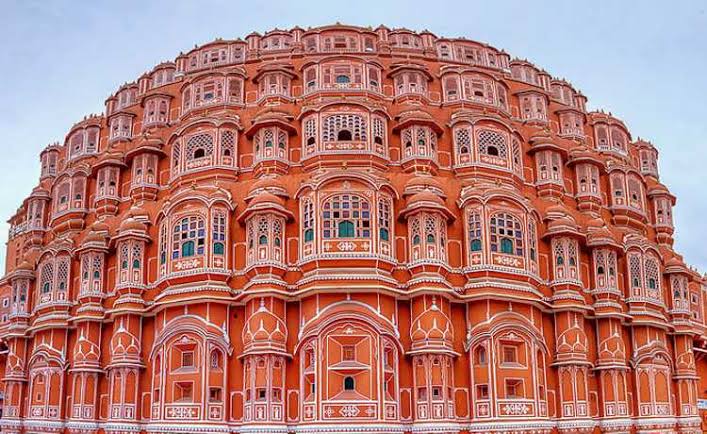
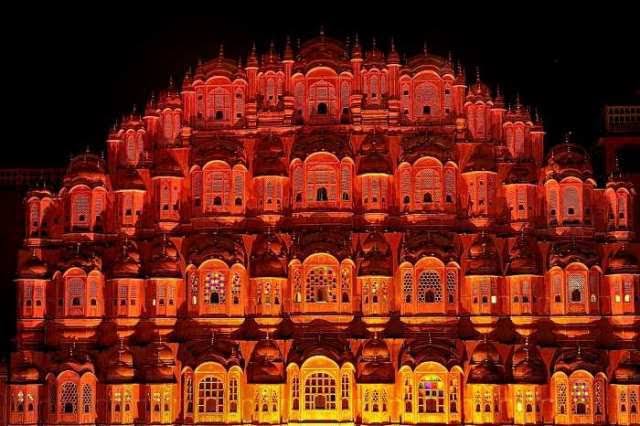
The structure was built in 1799 by Maharaja Sawai Pratap Singh, the grandson of Maharaja Sawai Jai Singh, who was the founder of Jaipur. He was so inspired by the unique structure of Khetri Mahal that he built this grand and historical palace. It was designed by Lal Chand Ustad. Its unique five floors exterior is akin to the honeycomb of a beehive with its 953 small windows called Jharokhas decorated with intricate latticework. The original intent of the lattice design was to allow royal ladies to observe everyday life and festivals celebrated in the street below without being seen since they had to obey the strict rules of “purdah”, which forbade them from appearing in public without face coverings. This architectural feature also allowed cool air from the Venturi effect to pass through, thus making the whole area more pleasant during the high temperatures in summer. Many people see the Hawa Mahal from the street view and think it is the front of the palace, but in reality, it is the back of that structure.
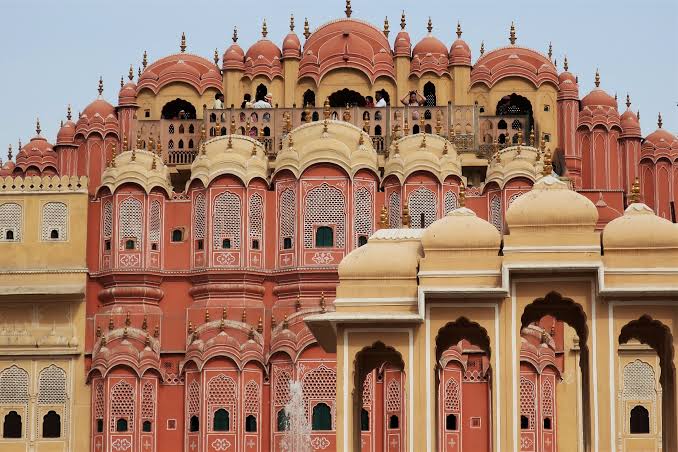
In 2006, renovation works on the Mahal were undertaken, after a gap of 50 years, to give a facelift to the monument at an estimated cost of Rs 4.568 million. The corporate sector lent a hand to preserve the historical monuments of Jaipur and the Unit Trust of India has adopted Hawa Mahal to maintain it. The palace is an extended part of a huge complex. The stone-carved screens, small casements, and arched roofs are some of the features of this popular tourist spot. The monument also has delicately modelled hanging cornices.
Architecture
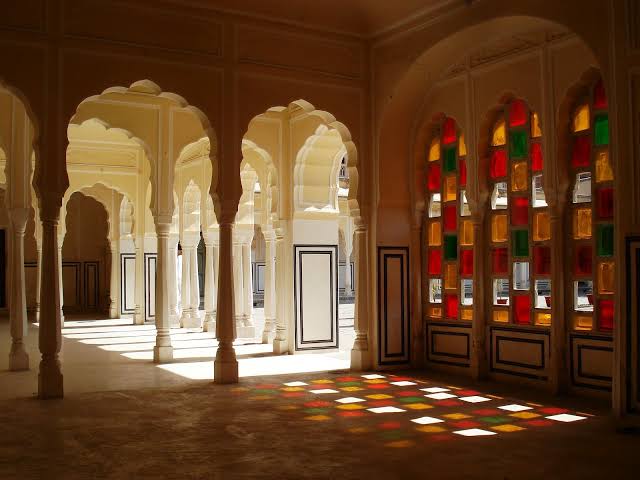
The palace is a five-story pyramidal shaped monument that rises to about 50 feet (15 m). The top three floors of the structure have the width of a single room, while the first and second floors have patios in front of them. The front elevation, as seen from the street, is like a honeycomb with small portholes. Each porthole has miniature windows and carved sandstone grills, finials and domes. It gives the appearance of a mass of semi-octagonal bays, giving the monument its unique façade. The inner face on the backside of the building consists of chambers built with pillars and corridors with minimal ornamentation, and reach up to the top floor. The interior of the palace has been described as “having rooms of different coloured marbles, relieved by inlaid panels or gilding; while fountains adorn the centre of the courtyard”.
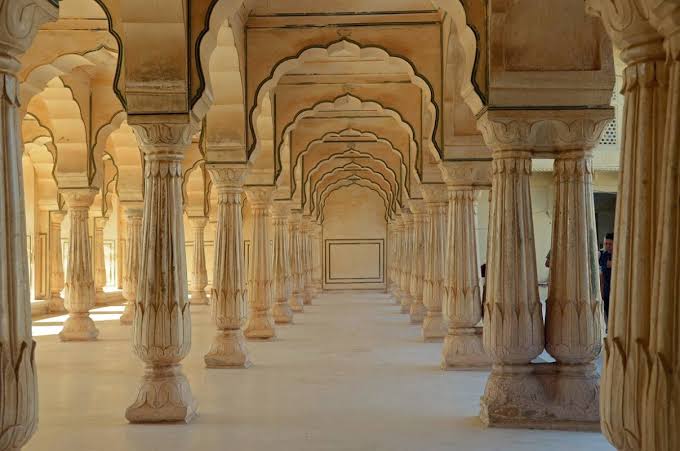
Lal Chand Ustad was the architect of this unique structure. Built-in red and pink coloured sandstone, in keeping with the décor of the other monuments in the city, its colour is a full testimony to the epithet of “Pink City” given to Jaipur. Its façade depicting 953 niches with intricately carved jharokhas (some are made of wood) is a stark contrast to the plain-looking rear side of the structure. Its cultural and architectural heritage is a true reflection of a fusion of Hindu Rajput architecture and Islamic Mughal architecture; the Rajput style is seen in the form of domed canopies, fluted pillars, lotus, and floral patterns, and the Islamic style as evident in its stone inlay filigree work and arches (as distinguished from its similarity with the Panch Mahal at Fatehpur Sikri).
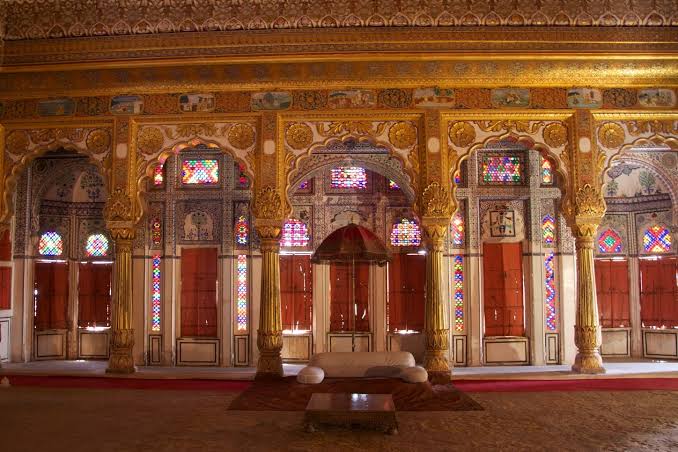
Hawa Mahal was also known as the chef-d’oeuvre of Maharaja Jai Singh as it was his favourite resort because of the elegance and built-in interior of the Mahal. The cooling effect in the chambers, provided by the breeze passing through the small windows of the facade, was enhanced by the fountains provided at the centre of each of the chambers. The top two floors of the Hawa Mahal are accessed only through ramps.
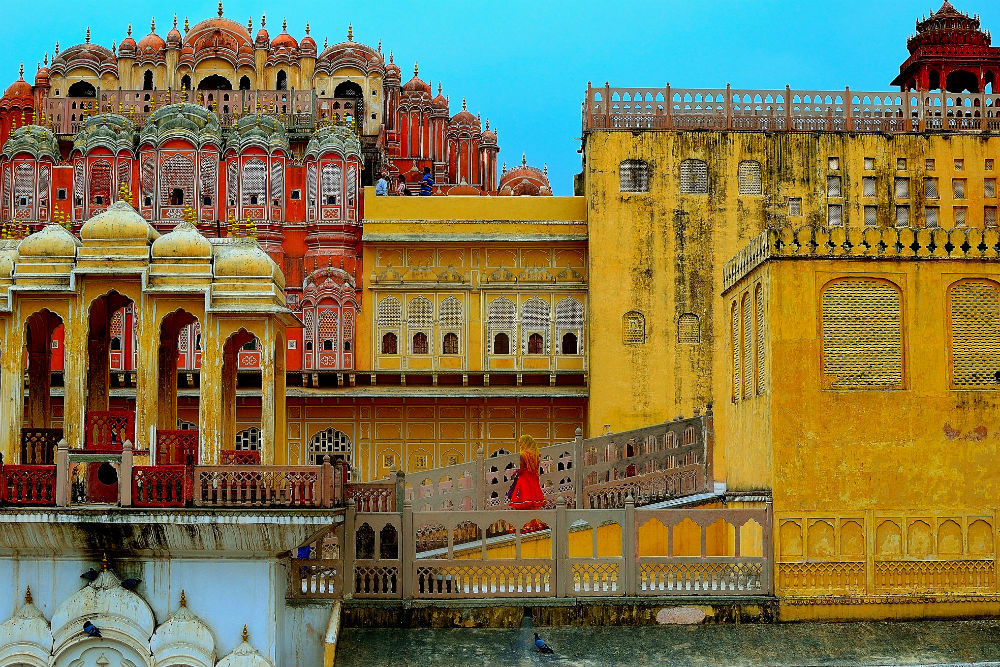
Hawa Mahal does not have a direct entrance; you will have to enter from the side of the City Palace. If you have already visited this monument, don’t wallow in nostalgia. Visit it again and see if you can spot the fun facts surrounding this epic monument of Jaipur.
Nearby Tourist Attractions :
There are numerous attractions around Hawa Mahal such as the famed Jantar Mantar, Govind Devji temple, Amer Fort, Nahargarh Fort, Ram Niwas Bagh, BM Birla Planetarium, Jain Temple, Statue Circle, Sisodia Rani Garden and so on. Hawa Mahal, which is the quintessence of Rajput architecture, stands high in the heart of Jaipur city as a prominent attraction.
Thank you for reading this blog and hanging in till here. I will be sharing my such travel experiences and destinations in future so follow my blogs and stay connected. Dont forget to hit the Like button if you found my blog interesting. You can also comment down your views below and share it.
You can also support me by following my other social media handles. You can find out the link in the bottom.
Thank You!
Team Travelographer

 Travelographer